


美國辭職大潮再加速
Kylie Logan, Lance Lambert
2021-11-16
新冠疫情導致數百萬人辭職,進一步加劇了勞動力短缺。
 文本設置
文本設置
 Plus(0條)

大辭職浪潮似乎正愈演愈烈。據美國勞工部(Labor Department)11月12日報道,今年9月有440萬人辭職,創下歷史新高。
9月的辭職率從8月的高達2.9%提高到3%。8月約有430萬人辭職。截至9月底,美國依舊有1040萬個職位空缺。
餐飲服務業和零售業的員工流失率最高。9月,餐飲服務業共有86.3萬員工離職,零售業有68.5萬人離職,辭職率分別為6.6%和4.4%。與此同時,酒店業有98.7萬人離職,貿易、交通運輸和公用事業等行業有98.4萬人離職,醫療保健行業有58.9萬人離職。
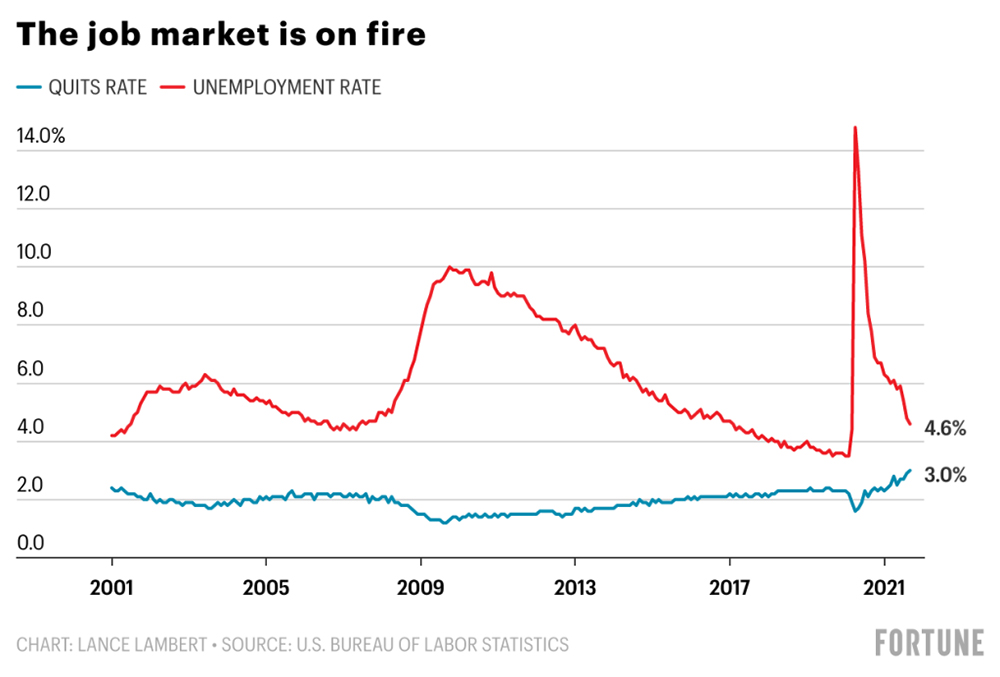
新冠疫情導致數百萬人辭職,進一步加劇了勞動力短缺。這種趨勢現在被稱為“大辭職浪潮”。雖然現有的職位空缺能夠讓美國每一位求職者找到一份工作,但據美國勞工統計局(U.S. Bureau of Labor Statistics)的數據顯示,截至10月共有740萬人沒有工作。但《財富》雜志的記者梅根·倫哈特認為,高居不下的辭職率與工作機會的關系不大,而是因為勞動者在新冠疫情之初經歷人生劇變等沖擊之后,他們所關注的重點發生了變化,還有一些勞動者可能不會重新進入勞動力市場。
September Digital.com對過去六個月辭職的約1250人所做的調查顯示,在最近的辭職者中,約44%正在尋找更有競爭力的薪酬和福利。約32%辭職后選擇自主創業。而占比62%的大多數人表示,他們之所以辭職是為了更好地掌控自己的生活,做“自己的老板”。還有許多人擔心返回辦公室辦公依舊不安全,而且人們回到辦公室辦公的動力不足:LinkedIn的數據顯示,從4月到7月,員工的工作倦怠現象增加了約9%。
人手短缺是首席執行官們最關注的問題。《財富》雜志10月的調查顯示,57%的首席執行官表示,他們最關心“如何吸引和招聘人才”;51%的首席執行官表示他們擔心如何留住人才;35%的受訪者表示去年為留住人才給員工提供了更多的福利。(財富中文網)
翻譯:劉進龍
審校:汪皓
大辭職浪潮似乎正愈演愈烈。據美國勞工部(Labor Department)11月12日報道,今年9月有440萬人辭職,創下歷史新高。
9月的辭職率從8月的高達2.9%提高到3%。8月約有430萬人辭職。截至9月底,美國依舊有1040萬個職位空缺。
餐飲服務業和零售業的員工流失率最高。9月,餐飲服務業共有86.3萬員工離職,零售業有68.5萬人離職,辭職率分別為6.6%和4.4%。與此同時,酒店業有98.7萬人離職,貿易、交通運輸和公用事業等行業有98.4萬人離職,醫療保健行業有58.9萬人離職。
新冠疫情導致數百萬人辭職,進一步加劇了勞動力短缺。這種趨勢現在被稱為“大辭職浪潮”。雖然現有的職位空缺能夠讓美國每一位求職者找到一份工作,但據美國勞工統計局(U.S. Bureau of Labor Statistics)的數據顯示,截至10月共有740萬人沒有工作。但《財富》雜志的記者梅根·倫哈特認為,高居不下的辭職率與工作機會的關系不大,而是因為勞動者在新冠疫情之初經歷人生劇變等沖擊之后,他們所關注的重點發生了變化,還有一些勞動者可能不會重新進入勞動力市場。
September Digital.com對過去六個月辭職的約1250人所做的調查顯示,在最近的辭職者中,約44%正在尋找更有競爭力的薪酬和福利。約32%辭職后選擇自主創業。而占比62%的大多數人表示,他們之所以辭職是為了更好地掌控自己的生活,做“自己的老板”。還有許多人擔心返回辦公室辦公依舊不安全,而且人們回到辦公室辦公的動力不足:LinkedIn的數據顯示,從4月到7月,員工的工作倦怠現象增加了約9%。
人手短缺是首席執行官們最關注的問題。《財富》雜志10月的調查顯示,57%的首席執行官表示,他們最關心“如何吸引和招聘人才”;51%的首席執行官表示他們擔心如何留住人才;35%的受訪者表示去年為留住人才給員工提供了更多的福利。(財富中文網)
翻譯:劉進龍
審校:汪皓
The Great Resignation appears to be getting worse. In September, 4.4 million people quit their jobs, a record high, the Labor Department reported on November 12.
September's quit rate rose to 3% from its high of 2.9% the previous month, when about 4.3 million people left their jobs. By the end of September, 10.4 million jobs remained open.
The food service and retail industries are shedding workers at the highest rates. A total of 863,000 workers in food service and 685,000 in retail left their jobs in September, at rates of 6.6% and 4.4%, respectively. Meanwhile, 987,000 left hospitality, another 984,000 left trade, transportation, and utilities industries, and 589,000 left health care.
The pandemic has led millions of workers to leave their jobs, in what's being called the Great Resignation, contributing to a growing labor shortage. Although there is a job opening for every American worker looking for employment, 7.4 million are without work as of October, according to the U.S. Bureau of Labor Statistics. But the sky-high number of quits has less to do with job availability than it does with a change in workers’ priorities, after a shock as life-altering as the onset of the pandemic, reports Fortune’s Megan Leonhardt—and some of the workers may not be coming back.
Among those who recently quit, about 44% are looking for more competitive wages and benefits, according to a September Digital.com survey of 1,250 American professionals who left their job in the past six months. About 32% quit to start their own businesses. The majority, 62%, said they quit specifically to have more control over their lives and to be their “own boss.” Many are also concerned that returning to in-person work is still unsafe, and their incentive to do so is limited anyway: Employee burnout increased by almost 9% from April to July, according to LinkedIn.
The labor shortage has been top of mind for CEOs. According to Fortune’s survey in October, 57% of CEOs said they’re most concerned about “attracting and recruiting talent”; 51% said they’re worried about retaining that talent; and 35% reported they’ve offered more benefits in the past year to compensate for the latter.

請打開財富Plus APP