


辦公室的歷史
Chloe Berger
2022-07-12
辦公空間將會如何演變?有沒有可能重新改造辦公室,讓人們真心希望在這里工作?
 文本設置
文本設置
 Plus(0條)

我們都知道有關辦公室的刻板印象。
甚至有一部與辦公室有關的長篇情景喜劇,講述了兩位上班族、美國的國民情侶吉姆和帕姆分分合合的浪漫故事。但大多數白領對辦公室環境并沒有溫馨、友善的感覺,他們的記憶中只有一排排開放的辦公桌和飲水機旁的閑聊。人們對辦公室的感受更多的是或愛或恨,或者由愛生恨。
新冠疫情期間的電視劇對辦公室的描述則充斥著黑暗和陰森的氛圍,比如《人生切割術》(Severance)或者《新創玩家》(WeCrashed)等。這種變化值得關注,因為《辦公室》(The Office)是對許多白領枯燥空虛的辦公室生活的頌歌。而現在與以前的主要區別在于:工作不會自然而然地意味著通勤到辦公室,而且隨著辦公室重新開放,它也不再是以前的樣子。
辦公家具制造商MillerKnoll的全球研究與洞察副總裁瑞安·安德森說:“我想大多數人不會質疑辦公室應該是什么樣子,直到他們長達一年被禁止進入辦公室。”
跨國設計公司帕金斯-威爾建筑事務所(Perkins & Will)的設計總監兼主管米娜·克雷內克認同這種觀點。她表示:“這是一個非常關鍵的時刻。員工這一次擁有比以往任何時候更大的話語權。你以為為什么會發生‘大辭職潮’(Great Resignation)?因為雇主不支持員工的生活方式。”
既然在新冠疫情之前沒有人喜歡辦公室,而且除了高管(實話實話,他們擁有最好的辦公環境)以外也沒有人愿意回到辦公室,辦公空間將會如何演變?有沒有可能重新改造辦公室,讓人們真心希望在這里工作?
為了預測辦公室文化的發展方向,《財富》雜志回顧了今天的辦公室文化如何誕生,以及我們想要什么樣的辦公室。為了分析在格子間之后,辦公室將會走向何方,首先得弄清楚格子間的由來。
Wi-Fi和大型科技公司豐厚福利的雙刃劍
安德森稱,當公司為了增加協作(和節約資金)開始拆除格子間時,成排辦公桌的設計似乎很激進,但這種開放式辦公室格局實際上誕生在格子間出現之前。
20世紀50年代,德國一場名為“Bürolandschaft”的設計運動,拒絕了辦公室應該千篇一律的觀念,更加重視舒適度。這場運動可以直接翻譯成“辦公室景觀”。開放式辦公時代的特征是,專注于創建更自然的布局,用綠植或屏幕分隔空間。
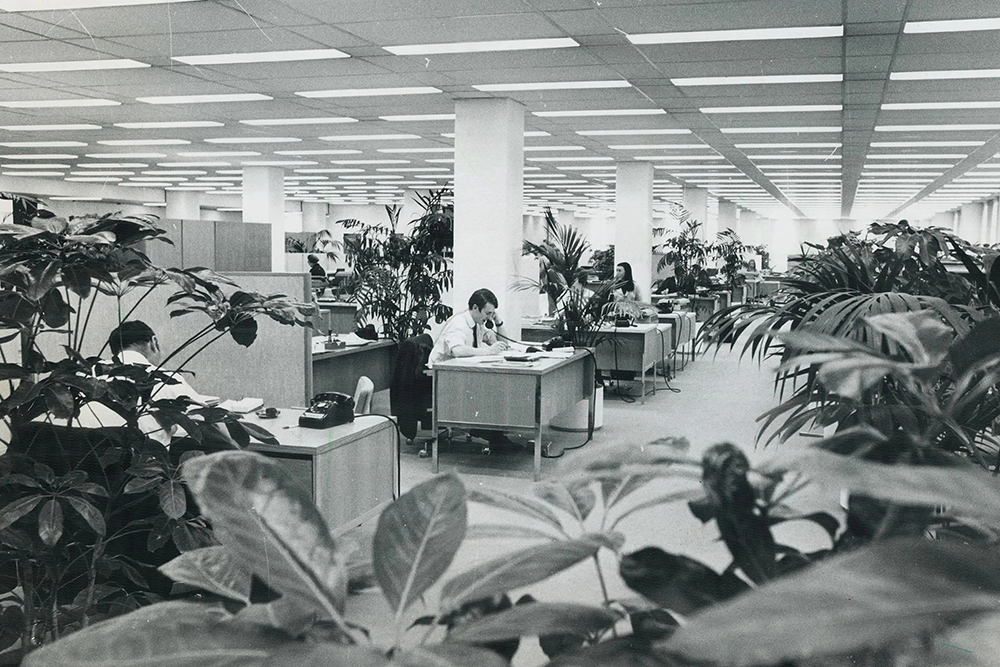
但20世紀60年代末臺式機的出現,讓辦公室布局發生了巨大變化。安德森解釋說,之后30年,電腦和電話成為辦公室工作的核心,空間設計也開始圍繞這種固定技術的需求展開。
“我們現代對于工作的設想,如需要在辦公室完成知識工作,需要在辦公桌上完成自己的工作,基本上都是那個時代的寫照。”安德森指出,大約15年后,快速的技術發展,使這種物理環境落伍,尤其是2004年和2005年Wi-Fi技術的出現,“但這些設想依舊存在。”
科技公司最終推動辦公室步入了新時代。國際WELL健康建筑研究院(International WELL Building Institute)的總裁兼首席執行官瑞秋·霍奇登指出:“從許多方面來說,我們應該感謝硅谷發起了健康職場和以人為本空間運動,因為硅谷公司開始在辦公室里布置休息艙、滑板車、攀巖墻和無限量供應食物的餐廳等。”
但這是一把雙刃劍:安德森認為,這種精心設計的辦公空間“有一種潛在的預期,即希望人們在這里花費大量時間。”
而且這種寬敞的開放辦公空間有一些令人煩惱的缺點。員工可能實際上緊鄰而坐,很難找到打電話或召開敏感會議的個人空間,還有太多讓人分心的因素。突然之間,人們開始想念格子間。
在新冠疫情爆發之前,公司高管不知道應該如何在格子間文化和開放式辦公室設計之間取得平衡。恢復現場辦公的趨勢和大辭職潮,終于給雇主帶來了壓力,迫使他們必須開發員工真正喜歡的辦公室布局。
辦公室變得更靈活,密度下降,采用社區型布局規劃
新冠疫情已經持續了兩年,公司希望重新布置辦公室空間,以鼓勵員工重回辦公室。許多公司選擇直接詢問員工的需求和期待。
商業地板公司Interface在2021年進行了一次調查,調查結果令該公司的工作/生活與職場策略總監達比·格雷西非常意外。
格雷西說:“人們最想念的是同事,但他們最擔心的也是同事。”
一種新的解決方案就是所謂的“社區型布局規劃”理念。辦公室采用這種設計,既提供了同事之間交流的空間,又保證了員工在需要更專注地工作時能夠躲到僻靜場所的靈活性。安德森解釋稱,辦公室變成了共享辦公桌、格子間和電話間的混合體,可以在開放式辦公與個人空間需求之間達到平衡。這意味著辦公室空間變得不像以前那么呆板,更像是家中的環境。
格雷西表示,最初,出于疫情防控的需要,Interface采用了這種社區型布局,以防止人員聚集,但他們很快意識到,用這種方式能夠很好地保證員工在辦公室里的交流。
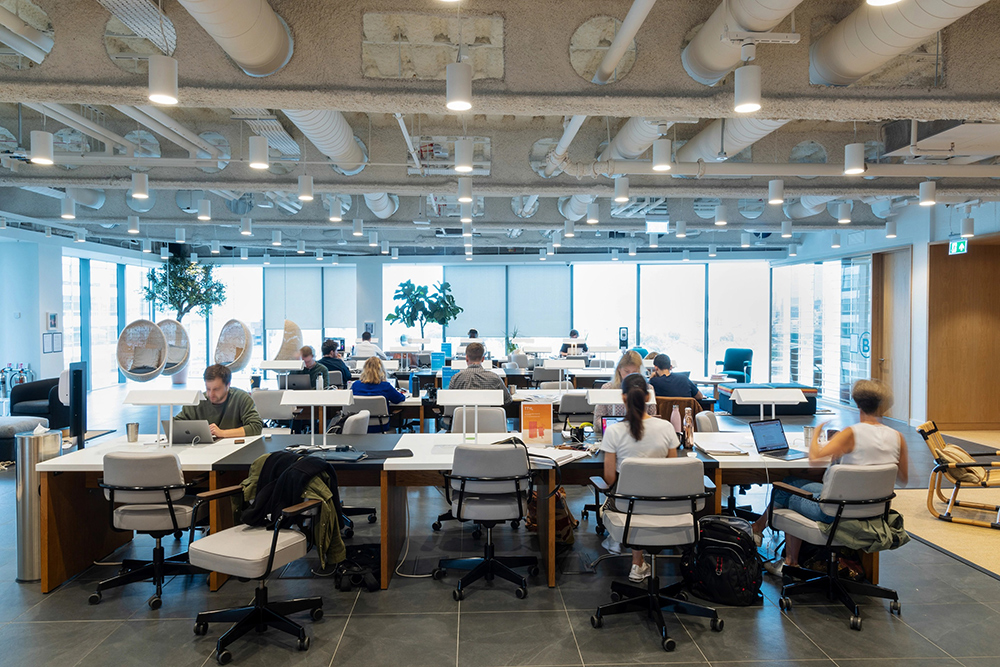
WeWork的全球設計總監艾比·維斯卡爾沃說:“未來的辦公室關鍵在于靈活性。”應該由公司自己決定哪一種辦公室布局最適合自己的團隊。
提供硅谷式的辦公室福利,比如康普茶或海洋球等,對員工的吸引力不及具有包容性的辦公空間,因為后者更有利于完成工作。
格雷西稱:“我并不認為這種噱頭一樣的福利,可以持續吸引員工留在辦公室。”相反,Interface在辦公室里添加了員工在居家辦公期間享受到的福利。例如,員工在居家辦公期間,喜歡擠出時間健身,于是Interface為辦公室購置了互動健身平臺Peloton。
雇主還在想方設法利用空間,滿足不同員工的多樣化需求。比如,安德森發現,有公司改造了健康空間以滿足各種需求,例如有的新手媽媽需要吸奶,有神經多樣性員工需要安靜空間,或者有色人種員工希望擺脫語碼轉換休息一下等。
霍奇登表示:“我們必須考慮如何保證辦公室設計的公平性。你的設計不能圍繞中間派展開,而是應該針對極端情況進行設計。”
現代辦公室將環境優美且功能齊全
霍奇登指出:“所有人面臨的一個共同問題”很簡單。“要求人們重回辦公室,如何提高他們的積極性和工作效率,如何讓他們變得更健康、更開心。”
克雷內克將新時代的辦公室布局比作了酒店業,“雇主作為主人招待員工。”
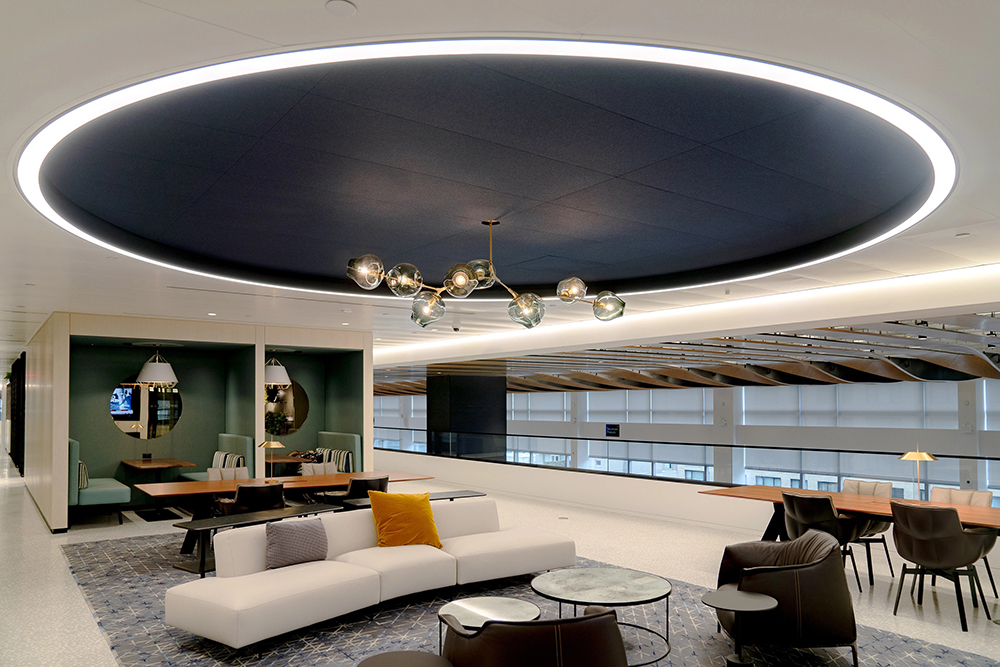
克雷內克表示:“辦公室確實非常重要。但它與傳統辦公室截然不同。它更像是酒店大堂,能夠成為雇主自夸的賣點。”
維斯卡爾沃認為,靈活性和優美的環境相結合至關重要。維斯卡爾沃解釋稱,辦公室設計將變得更以人為本,公司希望設計可以鼓勵協作和提高員工積極性,同時為員工提供他們所需的工具。維斯卡爾沃表示,傳統辦公室設計使用乏味的預制家具,翻新需要大量投資,這種新潮流給這些辦公室帶來了挑戰。
克雷內克稱,客戶不再像以前一樣要求她模仿谷歌(Google)設計他們的辦公室;他們正在努力了解員工的需求和期待。辦公室布局討論中,會邀請人力資源代表參與。辦公室翻新并沒有“一刀切”的方案,如果一家公司的辦公室看起來與競爭對手一模一樣,它將會落伍。
Industrial Facility的設計師金·科林說:“原因很簡單:缺乏創意的辦公室將無法吸引到有創意的人才。”
辦公室正在變成提供實用的便利設施的場所,因為公司能夠提供員工家中沒有的技術和工具,比如打印機和良好的Wi-Fi等。克雷內克表示:“我認為辦公室正在成為員工做好本職工作的資源中心。”
安德森將辦公室和家的差異,比作餐廳和自家廚房的差異。兩者不應該是競爭關系,理想情況下兩者可以互補。他認為,辦公室必須成為“一種按需提供的資源,補充居家辦公的不足。”
離開辦公室的這段時間讓員工明確了自己的需求,而緊張的勞動力市場也讓他們有能力促使雇主傾聽他們的需求。辦公室瀕臨消失的時代,為刺激創新創造了可能性。
安德森補充道:“給予員工自由,允許員工不必在辦公室工作,才是更合適的選擇,因為這樣可以讓辦公室不再是擺滿辦公桌的無聊空間,而將成為人們真正喜歡的場所。”(財富中文網)
譯者:劉進龍
審校:汪皓
我們都知道有關辦公室的刻板印象。
甚至有一部與辦公室有關的長篇情景喜劇,講述了兩位上班族、美國的國民情侶吉姆和帕姆分分合合的浪漫故事。但大多數白領對辦公室環境并沒有溫馨、友善的感覺,他們的記憶中只有一排排開放的辦公桌和飲水機旁的閑聊。人們對辦公室的感受更多的是或愛或恨,或者由愛生恨。
新冠疫情期間的電視劇對辦公室的描述則充斥著黑暗和陰森的氛圍,比如《人生切割術》(Severance)或者《新創玩家》(WeCrashed)等。這種變化值得關注,因為《辦公室》(The Office)是對許多白領枯燥空虛的辦公室生活的頌歌。而現在與以前的主要區別在于:工作不會自然而然地意味著通勤到辦公室,而且隨著辦公室重新開放,它也不再是以前的樣子。
辦公家具制造商MillerKnoll的全球研究與洞察副總裁瑞安·安德森說:“我想大多數人不會質疑辦公室應該是什么樣子,直到他們長達一年被禁止進入辦公室。”
跨國設計公司帕金斯-威爾建筑事務所(Perkins & Will)的設計總監兼主管米娜·克雷內克認同這種觀點。她表示:“這是一個非常關鍵的時刻。員工這一次擁有比以往任何時候更大的話語權。你以為為什么會發生‘大辭職潮’(Great Resignation)?因為雇主不支持員工的生活方式。”
既然在新冠疫情之前沒有人喜歡辦公室,而且除了高管(實話實話,他們擁有最好的辦公環境)以外也沒有人愿意回到辦公室,辦公空間將會如何演變?有沒有可能重新改造辦公室,讓人們真心希望在這里工作?
為了預測辦公室文化的發展方向,《財富》雜志回顧了今天的辦公室文化如何誕生,以及我們想要什么樣的辦公室。為了分析在格子間之后,辦公室將會走向何方,首先得弄清楚格子間的由來。
Wi-Fi和大型科技公司豐厚福利的雙刃劍
安德森稱,當公司為了增加協作(和節約資金)開始拆除格子間時,成排辦公桌的設計似乎很激進,但這種開放式辦公室格局實際上誕生在格子間出現之前。
20世紀50年代,德國一場名為“Bürolandschaft”的設計運動,拒絕了辦公室應該千篇一律的觀念,更加重視舒適度。這場運動可以直接翻譯成“辦公室景觀”。開放式辦公時代的特征是,專注于創建更自然的布局,用綠植或屏幕分隔空間。
但20世紀60年代末臺式機的出現,讓辦公室布局發生了巨大變化。安德森解釋說,之后30年,電腦和電話成為辦公室工作的核心,空間設計也開始圍繞這種固定技術的需求展開。
“我們現代對于工作的設想,如需要在辦公室完成知識工作,需要在辦公桌上完成自己的工作,基本上都是那個時代的寫照。”安德森指出,大約15年后,快速的技術發展,使這種物理環境落伍,尤其是2004年和2005年Wi-Fi技術的出現,“但這些設想依舊存在。”
科技公司最終推動辦公室步入了新時代。國際WELL健康建筑研究院(International WELL Building Institute)的總裁兼首席執行官瑞秋·霍奇登指出:“從許多方面來說,我們應該感謝硅谷發起了健康職場和以人為本空間運動,因為硅谷公司開始在辦公室里布置休息艙、滑板車、攀巖墻和無限量供應食物的餐廳等。”
但這是一把雙刃劍:安德森認為,這種精心設計的辦公空間“有一種潛在的預期,即希望人們在這里花費大量時間。”
而且這種寬敞的開放辦公空間有一些令人煩惱的缺點。員工可能實際上緊鄰而坐,很難找到打電話或召開敏感會議的個人空間,還有太多讓人分心的因素。突然之間,人們開始想念格子間。
在新冠疫情爆發之前,公司高管不知道應該如何在格子間文化和開放式辦公室設計之間取得平衡。恢復現場辦公的趨勢和大辭職潮,終于給雇主帶來了壓力,迫使他們必須開發員工真正喜歡的辦公室布局。
辦公室變得更靈活,密度下降,采用社區型布局規劃
新冠疫情已經持續了兩年,公司希望重新布置辦公室空間,以鼓勵員工重回辦公室。許多公司選擇直接詢問員工的需求和期待。
商業地板公司Interface在2021年進行了一次調查,調查結果令該公司的工作/生活與職場策略總監達比·格雷西非常意外。
格雷西說:“人們最想念的是同事,但他們最擔心的也是同事。”
一種新的解決方案就是所謂的“社區型布局規劃”理念。辦公室采用這種設計,既提供了同事之間交流的空間,又保證了員工在需要更專注地工作時能夠躲到僻靜場所的靈活性。安德森解釋稱,辦公室變成了共享辦公桌、格子間和電話間的混合體,可以在開放式辦公與個人空間需求之間達到平衡。這意味著辦公室空間變得不像以前那么呆板,更像是家中的環境。
格雷西表示,最初,出于疫情防控的需要,Interface采用了這種社區型布局,以防止人員聚集,但他們很快意識到,用這種方式能夠很好地保證員工在辦公室里的交流。
WeWork的全球設計總監艾比·維斯卡爾沃說:“未來的辦公室關鍵在于靈活性。”應該由公司自己決定哪一種辦公室布局最適合自己的團隊。
提供硅谷式的辦公室福利,比如康普茶或海洋球等,對員工的吸引力不及具有包容性的辦公空間,因為后者更有利于完成工作。
格雷西稱:“我并不認為這種噱頭一樣的福利,可以持續吸引員工留在辦公室。”相反,Interface在辦公室里添加了員工在居家辦公期間享受到的福利。例如,員工在居家辦公期間,喜歡擠出時間健身,于是Interface為辦公室購置了互動健身平臺Peloton。
雇主還在想方設法利用空間,滿足不同員工的多樣化需求。比如,安德森發現,有公司改造了健康空間以滿足各種需求,例如有的新手媽媽需要吸奶,有神經多樣性員工需要安靜空間,或者有色人種員工希望擺脫語碼轉換休息一下等。
霍奇登表示:“我們必須考慮如何保證辦公室設計的公平性。你的設計不能圍繞中間派展開,而是應該針對極端情況進行設計。”
現代辦公室將環境優美且功能齊全
霍奇登指出:“所有人面臨的一個共同問題”很簡單。“要求人們重回辦公室,如何提高他們的積極性和工作效率,如何讓他們變得更健康、更開心。”
克雷內克將新時代的辦公室布局比作了酒店業,“雇主作為主人招待員工。”
克雷內克表示:“辦公室確實非常重要。但它與傳統辦公室截然不同。它更像是酒店大堂,能夠成為雇主自夸的賣點。”
維斯卡爾沃認為,靈活性和優美的環境相結合至關重要。維斯卡爾沃解釋稱,辦公室設計將變得更以人為本,公司希望設計可以鼓勵協作和提高員工積極性,同時為員工提供他們所需的工具。維斯卡爾沃表示,傳統辦公室設計使用乏味的預制家具,翻新需要大量投資,這種新潮流給這些辦公室帶來了挑戰。
克雷內克稱,客戶不再像以前一樣要求她模仿谷歌(Google)設計他們的辦公室;他們正在努力了解員工的需求和期待。辦公室布局討論中,會邀請人力資源代表參與。辦公室翻新并沒有“一刀切”的方案,如果一家公司的辦公室看起來與競爭對手一模一樣,它將會落伍。
Industrial Facility的設計師金·科林說:“原因很簡單:缺乏創意的辦公室將無法吸引到有創意的人才。”
辦公室正在變成提供實用的便利設施的場所,因為公司能夠提供員工家中沒有的技術和工具,比如打印機和良好的Wi-Fi等。克雷內克表示:“我認為辦公室正在成為員工做好本職工作的資源中心。”
安德森將辦公室和家的差異,比作餐廳和自家廚房的差異。兩者不應該是競爭關系,理想情況下兩者可以互補。他認為,辦公室必須成為“一種按需提供的資源,補充居家辦公的不足。”
離開辦公室的這段時間讓員工明確了自己的需求,而緊張的勞動力市場也讓他們有能力促使雇主傾聽他們的需求。辦公室瀕臨消失的時代,為刺激創新創造了可能性。
安德森補充道:“給予員工自由,允許員工不必在辦公室工作,才是更合適的選擇,因為這樣可以讓辦公室不再是擺滿辦公桌的無聊空間,而將成為人們真正喜歡的場所。”(財富中文網)
譯者:劉進龍
審校:汪皓
We all know the stereotype about the office.
There was even a long-running sitcom about it, featuring a “will they/won’t they” romance between two office workers: America’s sweethearts, Jim and Pam. But most white-collar employees don’t have warm and fuzzy feelings about their office environment with its rows and rows of open desks and watercooler chitchat. It’s more love/hate or love to hate.
Pandemic-era TV is now filled with dark and bleak depictions of offices, like Severance or WeCrashed. That’s saying a lot, since The Office was an ode to the crushing boredom and inanity of many white-collar workplaces. The big difference now: Work doesn’t automatically mean commuting to an office anymore, and when the office comes back into the picture, it doesn’t look like it used to.
“I don't think most people even questioned what an office should be until they were denied access to them for a year,” says Ryan Anderson, vice president of global research and insights at MillerKnoll, a maker of office furniture.
“It's a really pivotal moment,” agrees Meena Krenek, design director and principal at Perkins & Will, a global design firm. “Employees have such a voice in this—more so than ever. Why do you think the Great Resignation happened? Employers weren't supporting the lifestyle of the employees.”
So if no one liked the office before the pandemic and no one but executives (who, let’s be honest, have the best setup) want to return, what happens to office space? Is it possible to reinvent it once again so people actually want to work there?
To get a feel for where office culture is headed, Fortune took a look back at just how we got here, and where we might want to go next. To understand what follows the cubicle, you have to understand how the cubicle came to be.
The double-edged sword of Wi-Fi and Big Tech’s big perks
While rows and rows of desk seemed radical when companies started ripping out cubicles to increase collaboration (and save money), Anderson says that the open floor plan actually came before the cubicles.
A German design movement in the 1950s known as Bürolandschaft rejected the idea that the office must be uniform and prioritized comfort instead. Directly translating to “office landscape,” this era of the open floor plan was defined by its focus on creating a more natural layout, breaking up space with plants or screens.
But the office layout changed dramatically with the introduction of the desktop computer in the late 1960s. Over the next 30 years, computers and phones were central to office work, and so the space was designed around the needs of this stationary technology, Anderson explains.
“Our modern assumptions about work—that you need to be in the office to do knowledge work, that you need to do your individual work at a desk—that all pretty much happened in that era.” Anderson says, pointing out that technology outgrew this physical setup around 15 years ago, especially when Wi-Fi arrived in 2004 and 2005, “but the assumptions lingered.”
It was tech companies that finally pushed offices into a new era. “In many ways, we have Silicon Valley to thank for the healthy workplaces and people-first spaces movement, because they started to outfit their office with the napping pods, scooters, rock-climbing walls, and unlimited food in the dining room,” says Rachel Hodgdon, president and CEO of International WELL Building Institute.
But this was a double-edged sword: With these fancy office spaces came “a latent expectation that people spent huge amounts of time there,” Anderson argues.
And then there were the annoying things that came with a wide-open floor plan. Workers sitting practically on top of one another, the struggle to find personal space for a phone call or a sensitive meeting, and so many distractions. Suddenly, people missed the cubicle.
Before COVID, company executives were struggling to figure out how to strike the balance between cubicle culture and an open floor plan. The return to work push coupled with the Great Resignation has finally put the pressure on employers to develop an office layout the employees actually like.
How the office has changed: more flexibility, de-densification, and neighborhood-based planning
Two years into the pandemic, companies are looking to reconfigure their office space in ways that will encourage employees to return. And many are directly asking their workforce what they need and want.
Darby Gracey, director of work/life and workplace strategy at commercial-flooring firm Interface, was surprised by the results of the survey conducted at Interface at the start of 2021.
“They missed the people the most, but the thing they were most worried about was people,” says Gracey.
A solution is emerging—a concept known as “neighborhood-based planning layouts.” With this design, offices provide room where colleagues can socialize but also the flexibility to retreat when they need to do more focused work. The office becomes a mix of shared desks, cubicles, and phone booths that help to strike a balance between an open floor plan and the need for individual space, Anderson explains. They are meant to feel less sterile and more like home.
At first Interface adapted these neighborhood layouts to de-densify in response to COVID protocols, but they quickly realized it was a good way to make sure people connected within the office, Gracey says.
“The future of the office is about having that flexibility,” says Ebbie Wisecarver, head of global design at WeWork. And it’s up to companies to determine what layouts work best for their specific workforce.
Simply offering Silicon Valley–like office perks—kombucha or ball pits—are less attractive to workers than inclusive spaces that are conducive to getting work done.
“I don't think gimmicky perks will have any staying power to entice people to spend time in the office,” says Gracey. Instead, Interface added in-office benefits that its staff reported enjoying while working at home. For instance, workers liked being able to squeeze in a workout at home, so Interface brought Pelotons to the office.
Employers are also figuring out ways to utilize spaces to meet the diverse needs of multiple staffers. Anderson has seen companies, for example, adapting wellness spaces so they can be used for a wide array of needs: a new mother who needs to pump, a neurodivergent staffer who needs a quiet space, or a person of color who would like a break from code-switching.
“We have to think about how to make design equitable,” says Hodgdon. “This is where you don't design for the median, you design for the extremes.”
Modern offices are expected to be beautiful and functional
“The question that everybody is facing” is simple, Hodgdon says. “How will asking people to return to the office make them more engaged, more productive, more healthy, and more happy.”
Krenek likens this new era of office layout to hospitality, where the “employer is hosting the employee.”
“The office really does matter. But it doesn't look like the traditional office anymore. It looks like a hotel lobby—it looks like something to brag about,” says Krenek.
The combination of flexibility and beautiful spaces is important, says Wisecarver. Design is about to become more human-centric, and companies will start to want designs that encourage collaboration and engage workers while supplying them with the tools they need, explains Wisecarver. This creates a challenge for generations of offices that were built around durable but uninspiring prefab furniture and require immense investments to overhaul, Wisecarver says.
Krenek says clients are no longer coming to her and asking to look like Google; they’re trying to understand what employees need and want. Human resource representatives are now included in office layout discussions. There is no one-size-fits-all for office renovations, and companies that look just like their competitors will fall behind.
“It's simple: Offices that are not creative will not attract people who are,” argues Kim Colin, a designer for Industrial Facility.
The office is also becoming a place for practical amenities as companies leverage tech and all the tools that staff members don't have in their homes like printers and good Wi-Fi. “I really see the office becoming this resource center for people to do their best work,” says Krenek.
Anderson compares the differences between the office and home to that of a restaurant versus cooking in your kitchen. The two don’t necessarily compete, but ideally they complement each other. The office must become an “on-demand resource that complements the home,” he says.
The break from the office has given employees the clarity to understand what they want, and the tight labor market is giving them to power to push employers to listen to their needs. In a time when the office is on the verge of extinction, there is a possibility for greater innovation.
“Freeing people to not have to work in the office allows the office to become something way more desirable because it can stop the sea of desks and start being something that people really love,” adds Anderson.

請打開財富Plus APP