


美國銀行頂級策略師表示,美股現在“更接近1995年”
WILL DANIEL
2024-04-08
這位資深策略師指出,高估值的大型科技股掩蓋了整體市場的真實估值。
 文本設置
文本設置
 Plus(0條)


由于經濟數據出乎意料地強勁,加上投資者對人工智能的熱情,標準普爾500指數在過去12個月里上漲了32%,一些專家擔心股市存在泡沫。美國銀行美國股票和量化策略主管薩維塔·蘇布拉馬尼安絕對不是其中之一,但在近日將標準普爾500指數的年終目標價從5000點上調至5400點后,她采取了相對不同尋常的舉措,稱她聽到了不少看空市場的聲音。
蘇布拉馬尼安在一份報告中表示,自從她做出看漲的判斷以來,“整整一周都收到反饋和反對意見”,其中包括有人在電話會議上直接提問:“薩維塔,你預測會進入泡沫區域嗎?”蘇布拉馬尼安堅持認為,這個問題的答案是否定的,而且她已經準備好解決這一問題。
在美國銀行研究中心發布的一份常見問題解答中,這位資深分析師解釋說,盡管人們對潛在的非理性市場繁榮感到擔憂,但之前的市場泡沫通常都有幾大關鍵因素——主要是“股指價格與內在價值之間的差距較大”和“投機行為猖獗”——而當前的市場不符合這些條件。她寫道:“2007年的房地產泡沫、2000年的科技股泡沫、1637年的郁金香泡沫都符合這些條件。但如今的標準普爾500指數并非如此。”
盡管如此,隨著人工智能熱潮不斷推高科技股,這就讓人回想起互聯網時代,一些華爾街專家將其與互聯網泡沫相提并論。如今,人們正在爭論,如今的情況是1995年的情景重演,那時科技股牛市才剛剛開始,還是更像1999年的情景重演,崩盤就在眼前。
蘇布拉馬尼安向讀者保證,在她看來,現在“更像1995年的情景重演”。從投資者相對低迷的情緒水平,到不斷提高的生產力和大型科技公司領導的基本面優勢,現在還未進入泡沫區域。
股票被高估了,屬實嗎?
第一條批評蘇布拉馬尼安看漲標準普爾500指數的預測與市場估值有關。美國銀行的數據顯示,標準普爾500指數目前的遠期市盈率約為20.5倍,而1986年以來的平均遠期市盈率為15.8倍。
蘇布拉馬尼安承認:“基于快照市盈率,價格與內在價值之間的差距很大。但在我們看來,舊‘七巨頭’(Magnificent Seven)指數(蘋果、微軟、Alphabet、亞馬遜、英偉達、特斯拉和Meta)的市盈率更接近長期平均水平,更重要的是,如今的指數與過去幾十年的指數缺乏可比性。”
這位資深策略師指出,高估值的大型科技股掩蓋了整體市場的真實估值。在她看來,包括微軟(Microsoft)、谷歌(Google)、蘋果(Apple)、英偉達(Nvidia)、特斯拉(Tesla)、Meta和亞馬遜(Amazon)在內的“七巨頭”的過去12個月市盈率約為38倍,而標準普爾500指數整體市盈率為23倍。
蘇布拉馬尼安還指出,標準普爾500指數的成分股與過去大不相同,這使得將該指數的估值與歷史平均水平進行比較參考價值并不大。
“估值很重要。但考慮到該指數的組合變化,將目前的歷史市盈率與過去幾十年的歷史市盈率進行比較意義不大。如今標準普爾500指數的杠桿率是過去幾十年的一半,質量更高,收益波動性與過去幾十年相似或更低。”
但投資者是否過于樂觀?
任何股市泡沫的第二個最常見特征就是興奮。在過去12個月里,以英偉達(Nvidia)278%的漲幅為首的人工智能股飆升,讓一些人認為投資者熱情高漲,但蘇布拉馬尼安用美國銀行的一些數據反駁了這一觀點。
她指出,美國股票投資者的興奮點被“圈定”在人工智能等主題上,但整體情緒“遠未達到此前市場高峰期的看漲水平”。事實上,根據美國銀行的數據,投資者情緒正處于1995年的水平。蘇布拉馬尼安寫道:“盡管我們聽到有人反駁市場情緒'全面看漲',但市場情緒是中性的。”
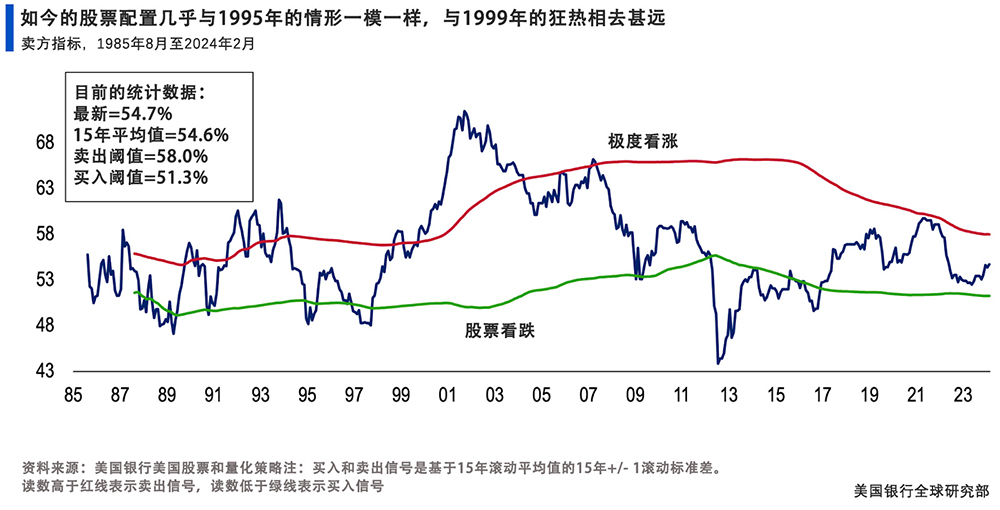
總體而言,在蘇布拉馬尼安看來,盡管股市在過去一年飆升,標準普爾500指數“缺乏泡沫跡象”。"在我們看來,這輪牛市還有上漲空間。”她寫道,并補充道,"如今的情況是1995年的情景重演,而非1999年。”
熊市觀點
雖然蘇布拉馬尼安認為2024年股市將再創輝煌,但總有看跌者發出警告。Tidal Financial Group的投資組合經理邁克爾·蓋德(Michael Gayed)對《傻瓜投資指南》(The Motley Fool)表示,“我們遇到了很多麻煩,所有泡沫都會終結”。
投資銀行對真正的泡沫并不那么擔心,但也有一些知名人士看跌,包括摩根士丹利(Morgan Stanley)首席投資長兼首席美國股票策略師麥克·威爾遜(Mike Wilson),他預計標準普爾500指數未來12個月將下跌約12%,至4500點。威爾遜并不認為我們正處于泡沫之中,但他指出,自去年10月以來,標準普爾500指數“歷史性”上漲了25%,其中90%是由估值上升推動的,而不是盈利增加。
這位首席投資官在一份報告中解釋說,他認為今年市場是由“模糊性”和“流動性”驅動的,這意味著投資者應該對回調保持警惕。
至于市場等式的模糊性部分,威爾遜指出,經濟和股市“相互矛盾的數據”可能會引起擔憂。強勁的經濟增長與低迷的盈利;股市估值上升與美聯儲更加鷹派的立場;這些都不是你所期望的典型組合。經濟增長通常會推動企業實現盈利,而加息的威脅應該會降低股市估值。那么,是什么造成了這些相互矛盾的數據呢?
威爾遜寫道:“我們認為,從經濟、盈利和業績的角度來看,目前的政策組合解釋了許多難以調和的脫節現象。”
摩根士丹利首席信息官表示,聯邦政府通過《通貨膨脹削減法案》和《芯片和科學法案》的支出正在推動私營建筑和制造業公司加大支出,并進行人員招聘,從而保持經濟增長活力。但這些支出存在一個問題,可以解釋為什么收益不如最近的經濟數據那么強勁:“雖然這些計劃有助于保持經濟增長,但也擠占了私營部門的空間,因為它們影響了勞動力、材料和資本的成本。”威爾遜說。
因此,威爾遜的“模糊性”—— 或者說經濟數據點與股市數據點相互矛盾——在一定程度上可以用聯邦政府支出的增加來解釋。但威爾遜表示,等式的第二部分是流動性,這有助于解釋股市表現強勁與盈利增長相對疲弱之間的差異。
這就是逆回購機制的作用所在。為了幫助支付聯邦政府的巨額預算赤字,美聯儲允許私營公司賺取少許額外的錢,通常是通過中介機構,而且基本上是通過隔夜貸款給美聯儲。這些公司買入美國國債,然后同意日后以更高價格賣出,賺取收益,但在短期內為美聯儲提供現金。這是美聯儲用來為短期利率設定下限的工具,但也會導致流動性上升。威爾遜解釋說:“在我們看來,這種流動性推動了資產價格的普遍上漲,而且股票市場/資產類別中一些投機性較強的領域占據主導地位。”
威爾遜關于模糊性和流動性的論點長篇累牘,但簡而言之,就是讓投資者“謹慎行事”,因為推動市場上漲的因素可能無法持續。威爾遜總結說:“隨著市場更好地掌握這些動態,如今的盈利/基本面有可能出現更實質性的改善。”(財富中文網)
譯者:中慧言-王芳
由于經濟數據出乎意料地強勁,加上投資者對人工智能的熱情,標準普爾500指數在過去12個月里上漲了32%,一些專家擔心股市存在泡沫。美國銀行美國股票和量化策略主管薩維塔·蘇布拉馬尼安絕對不是其中之一,但在近日將標準普爾500指數的年終目標價從5000點上調至5400點后,她采取了相對不同尋常的舉措,稱她聽到了不少看空市場的聲音。
蘇布拉馬尼安在一份報告中表示,自從她做出看漲的判斷以來,“整整一周都收到反饋和反對意見”,其中包括有人在電話會議上直接提問:“薩維塔,你預測會進入泡沫區域嗎?”蘇布拉馬尼安堅持認為,這個問題的答案是否定的,而且她已經準備好解決這一問題。
在美國銀行研究中心發布的一份常見問題解答中,這位資深分析師解釋說,盡管人們對潛在的非理性市場繁榮感到擔憂,但之前的市場泡沫通常都有幾大關鍵因素——主要是“股指價格與內在價值之間的差距較大”和“投機行為猖獗”——而當前的市場不符合這些條件。她寫道:“2007年的房地產泡沫、2000年的科技股泡沫、1637年的郁金香泡沫都符合這些條件。但如今的標準普爾500指數并非如此。”
盡管如此,隨著人工智能熱潮不斷推高科技股,這就讓人回想起互聯網時代,一些華爾街專家將其與互聯網泡沫相提并論。如今,人們正在爭論,如今的情況是1995年的情景重演,那時科技股牛市才剛剛開始,還是更像1999年的情景重演,崩盤就在眼前。
蘇布拉馬尼安向讀者保證,在她看來,現在“更像1995年的情景重演”。從投資者相對低迷的情緒水平,到不斷提高的生產力和大型科技公司領導的基本面優勢,現在還未進入泡沫區域。
股票被高估了,屬實嗎?
第一條批評蘇布拉馬尼安看漲標準普爾500指數的預測與市場估值有關。美國銀行的數據顯示,標準普爾500指數目前的遠期市盈率約為20.5倍,而1986年以來的平均遠期市盈率為15.8倍。
蘇布拉馬尼安承認:“基于快照市盈率,價格與內在價值之間的差距很大。但在我們看來,舊‘七巨頭’(Magnificent Seven)指數(蘋果、微軟、Alphabet、亞馬遜、英偉達、特斯拉和Meta)的市盈率更接近長期平均水平,更重要的是,如今的指數與過去幾十年的指數缺乏可比性。”
這位資深策略師指出,高估值的大型科技股掩蓋了整體市場的真實估值。在她看來,包括微軟(Microsoft)、谷歌(Google)、蘋果(Apple)、英偉達(Nvidia)、特斯拉(Tesla)、Meta和亞馬遜(Amazon)在內的“七巨頭”的過去12個月市盈率約為38倍,而標準普爾500指數整體市盈率為23倍。
蘇布拉馬尼安還指出,標準普爾500指數的成分股與過去大不相同,這使得將該指數的估值與歷史平均水平進行比較參考價值并不大。
“估值很重要。但考慮到該指數的組合變化,將目前的歷史市盈率與過去幾十年的歷史市盈率進行比較意義不大。如今標準普爾500指數的杠桿率是過去幾十年的一半,質量更高,收益波動性與過去幾十年相似或更低。”
但投資者是否過于樂觀?
任何股市泡沫的第二個最常見特征就是興奮。在過去12個月里,以英偉達(Nvidia)278%的漲幅為首的人工智能股飆升,讓一些人認為投資者熱情高漲,但蘇布拉馬尼安用美國銀行的一些數據反駁了這一觀點。
她指出,美國股票投資者的興奮點被“圈定”在人工智能等主題上,但整體情緒“遠未達到此前市場高峰期的看漲水平”。事實上,根據美國銀行的數據,投資者情緒正處于1995年的水平。蘇布拉馬尼安寫道:“盡管我們聽到有人反駁市場情緒'全面看漲',但市場情緒是中性的。”
總體而言,在蘇布拉馬尼安看來,盡管股市在過去一年飆升,標準普爾500指數“缺乏泡沫跡象”。"在我們看來,這輪牛市還有上漲空間。”她寫道,并補充道,"如今的情況是1995年的情景重演,而非 1999年。”
熊市觀點
雖然蘇布拉馬尼安認為2024年股市將再創輝煌,但總有看跌者發出警告。Tidal Financial Group的投資組合經理邁克爾·蓋德(Michael Gayed)對《傻瓜投資指南》(The Motley Fool)表示,“我們遇到了很多麻煩,所有泡沫都會終結”。
投資銀行對真正的泡沫并不那么擔心,但也有一些知名人士看跌,包括摩根士丹利(Morgan Stanley)首席投資長兼首席美國股票策略師麥克·威爾遜(Mike Wilson),他預計標準普爾500指數未來12個月將下跌約12%,至4500點。威爾遜并不認為我們正處于泡沫之中,但他指出,自去年10月以來,標準普爾500指數“歷史性”上漲了25%,其中90%是由估值上升推動的,而不是盈利增加。
這位首席投資官在一份報告中解釋說,他認為今年市場是由“模糊性”和“流動性”驅動的,這意味著投資者應該對回調保持警惕。
至于市場等式的模糊性部分,威爾遜指出,經濟和股市“相互矛盾的數據”可能會引起擔憂。強勁的經濟增長與低迷的盈利;股市估值上升與美聯儲更加鷹派的立場;這些都不是你所期望的典型組合。經濟增長通常會推動企業實現盈利,而加息的威脅應該會降低股市估值。那么,是什么造成了這些相互矛盾的數據呢?
威爾遜寫道:“我們認為,從經濟、盈利和業績的角度來看,目前的政策組合解釋了許多難以調和的脫節現象。”
摩根士丹利首席信息官表示,聯邦政府通過《通貨膨脹削減法案》和《芯片和科學法案》的支出正在推動私營建筑和制造業公司加大支出,并進行人員招聘,從而保持經濟增長活力。但這些支出存在一個問題,可以解釋為什么收益不如最近的經濟數據那么強勁:“雖然這些計劃有助于保持經濟增長,但也擠占了私營部門的空間,因為它們影響了勞動力、材料和資本的成本。”威爾遜說。
因此,威爾遜的“模糊性”—— 或者說經濟數據點與股市數據點相互矛盾——在一定程度上可以用聯邦政府支出的增加來解釋。但威爾遜表示,等式的第二部分是流動性,這有助于解釋股市表現強勁與盈利增長相對疲弱之間的差異。
這就是逆回購機制的作用所在。為了幫助支付聯邦政府的巨額預算赤字,美聯儲允許私營公司賺取少許額外的錢,通常是通過中介機構,而且基本上是通過隔夜貸款給美聯儲。這些公司買入美國國債,然后同意日后以更高價格賣出,賺取收益,但在短期內為美聯儲提供現金。這是美聯儲用來為短期利率設定下限的工具,但也會導致流動性上升。威爾遜解釋說:“在我們看來,這種流動性推動了資產價格的普遍上漲,而且股票市場/資產類別中一些投機性較強的領域占據主導地位。”
威爾遜關于模糊性和流動性的論點長篇累牘,但簡而言之,就是讓投資者“謹慎行事”,因為推動市場上漲的因素可能無法持續。威爾遜總結說:“隨著市場更好地掌握這些動態,如今的盈利/基本面有可能出現更實質性的改善。”(財富中文網)
譯者:中慧言-王芳
With unexpectedly strong economic data and investors’ AI enthusiasm driving the S&P 500 32% higher over the past 12 months, some experts are worried that the stock market is in a bubble. Bank of America head of U.S. equity and quantitative strategy Savita Subramanian definitely isn’t one of them, but after raising her year-end price target for the S&P 500 from 5,000 to 5,400 last week, she took the relatively unusual step of saying she’d heard from quite a few market bears.
Subramanian said in a Monday note that she had a “full week of feedback and pushback” since making her bullish call, including a direct question on a call that went something like: “Savita, are you forecasting a bubble?” The answer to that question is no, Subramanian insists—and she’s ready to address the concern.
In an FAQ issued by Bank of America Research, the veteran analyst explained that despite all the fears over a potentially irrationally exuberant market, prior market bubbles have typically featured a few key factors—mainly “a gap between price and intrinsic value” and “rampant speculation”—and the current market doesn’t fit the bill. “Housing in 2007, tech in 2000, tulips in 1637 are examples that tick these boxes. But the S&P 500 today does not,” she wrote.
Still, with AI fervor harkening back to the internet era as it pushes some tech stocks ever higher, a few Wall Street experts have made comparisons to the dotcom bubble. Now, there’s an argument over whether we’re repeating 1995, and the tech bull run is just getting started, or whether it’s more like 1999, and a crash is right around the corner.
Subramanian reassured readers that, in her view, it’s “more 1995.” From investors’ relatively subdued sentiment levels to rising productivity and the fundamental strength of Big Tech leadership, this isn’t a bubble just yet.
Stocks are overvalued, right?
The first criticism of Subramanian’s bullish prediction for the S&P 500 has to do with market valuations. The S&P 500 currently trades at roughly 20.5 times forward earnings, compared with an average of 15.8 since 1986, according to BofA data.
“The gap between price and intrinsic value is high, based on snapshot P/E multiples,” Subramanian admitted. “But the ex–Magnificent Seven trades closer to long-term average multiples, and, more importantly, today’s index lacks comparability to prior decades’, in our view.”
The veteran strategist noted that highly valued Big Tech stocks are obscuring the true valuation of the overall market. To her point, the Magnificent Seven—a group that includes Microsoft, Google, Apple, Nvidia, Tesla, Meta, and Amazon—trade at roughly 38 times their trailing 12-month earnings, compared with 23 times for the S&P 500 as a whole.
Subramanian also pointed out that the S&P 500’s constituents are quite different from what they used to be, which makes comparing the index’s valuation with its historical average less valuable.
“Valuation matters. But comparing a trailing P/E today to a trailing P/E of prior decades makes little sense given the index’s mix shi?t,” she wrote. “Today’s S&P 500 is half as levered, is higher quality, and has similar or lower earnings volatility than in prior decades.”
But are investors too euphoric?
The second most common feature in any stock market bubble is euphoria. And surging AI stocks, led by the 278% rise in Nvidia over the past 12 months, have some arguing that investors are pretty enthusiastic, but Subramanian used some of BofA’s data to push back on that idea.
She noted that U.S. equity investors’ excitement has been “ring-fenced” to themes like AI, but overall sentiment is “nowhere near bullish levels of prior market peaks.” In fact, investor sentiment is right around where it was in 1995, according to BofA data. “Sentiment is neutral despite pushback we hear that sentiment is ‘full bull,’” Subramanian wrote.
Overall, for Subramanian, despite the stock market’s surge over the past year, the S&P 500 “lacks signs” of a bubble. “In our view, this bull market has legs,” she wrote, adding “today is 1995, not 1999.”
The bears’ take
While Subramanian has made the case for the stock market to experience another banner year in 2024, there are always bears dishing out warnings. Just this week, Michael Gayed, a portfolio manager at Tidal Financial Group, told?The?Motley Fool that “we’re in a lot of trouble” and that “all bubbles end.”
Investment banks aren’t as worried about a true bubble, but there are a few big-name bears out there, including Morgan Stanley’s chief investment officer and chief U.S. equity strategist, Mike Wilson, who sees the S&P 500 dropping roughly 12% to 4,500 over the next 12 months. Wilson isn’t arguing we’re in a bubble, but he notes that 90% of the S&P 500’s “historic” 25% rally since October has been driven by rising valuations instead of improving earnings.
The CIO explained in a Monday note that he believes the market is being driven by “ambiguity” and “liquidity” this year, which means investors should remain vigilant for a correction.
As for the ambiguity part of the market equation, Wilson pointed to “conflicting data” in the economy and stock market that could be cause for concern. Strong economic growth with muted earnings; rising stock market valuations with a more hawkish Fed; these aren’t the typical combinations that you’d expect. Economic growth usually drives corporate earnings, and the threat of higher rates is supposed to decrease stock market valuations. So what’s to blame for the conflicting data?
“We think the current policy mix explains many of the disconnects that have been hard to reconcile from an economic, earnings, and performance standpoint,” Wilson wrote.
Federal government spending via the Inflation Reduction Act and CHIPS Act is driving spending and hiring by private construction and manufacturing companies, keeping economic growth alive, according to the Morgan Stanley CIO. But there’s an issue with this spending that could explain why earnings aren’t as strong as recent economic data: “While these programs are helping to keep the economy humming, they are also crowding out the private sector as they impact the cost of labor, materials, and capital,” Wilson said.
So Wilson’s “ambiguity”—or conflicting data points in the economy compared with the stock market—can partly be explained by rising federal government spending. But the second part of the equation is liquidity, which helps to explain the difference in the stock market’s strong performance compared with its relatively muted earnings growth, according to Wilson.
This is where the reverse repo facility comes in. In order to help pay for the federal government’s large budget deficit, the Federal Reserve allows private sector companies to earn a little extra money, often through an intermediary, by essentially lending money to the Federal Reserve overnight. These companies buy U.S. Treasuries and then agree to sell them back at a higher price at a later date, earning yield but providing the Fed with cash over a short term. This is used as a tool by the Fed to put a floor under short-term interest rates, but it also leads to rising liquidity. “In our view, that liquidity has helped to elevate asset prices broadly, led by some of the more speculative areas of the equity market/asset classes,” Wilson explained.
Wilson’s ambiguity and liquidity argument is a long, detailed way of saying “be careful” to investors, because the factors driving market gains may not be sustainable. “With these dynamics now better understood by the market, the burden is now likely on earnings/fundamentals to show more material improvement,” Wilson concluded.

請打開財富Plus APP