


美國借款人迎來借貸成本高企時代
Greg McKenna
2025-05-29
抵押貸款利率及其他長期借貸成本或持續維持在高位。
 文本設置
文本設置
 Plus(0條)


? 自20世紀80年代中期以來,得益于低通脹和美元霸主地位,長期利率總體呈穩步下降趨勢。然而,赤字擔憂和全球貿易增速放緩或持續對美債收益率構成上行壓力。
美國共和黨“大而美”法案里提出的減稅舉措,正促使投資者像2007年那樣拋售美債。然而,此次長期債券收益率近期的大幅飆升,或許并非短暫上揚,而是預示著美國借款人未來將面臨的利率走勢。
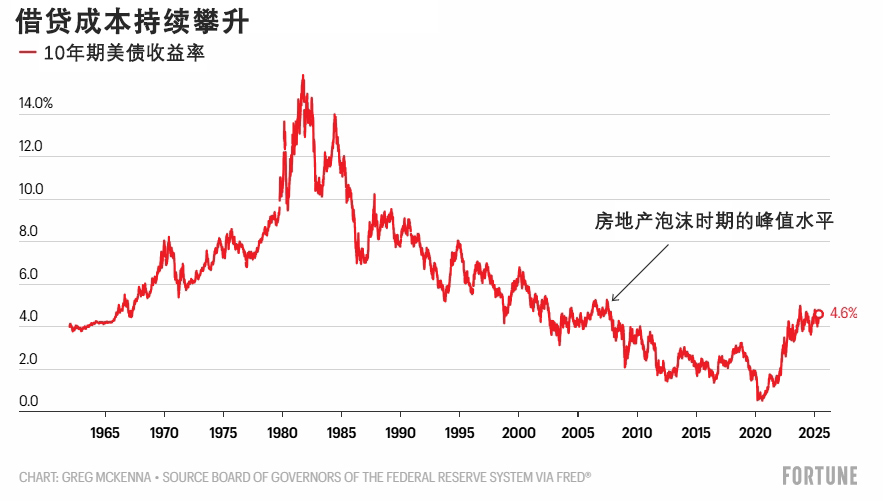
以10年期美債收益率為例——它是抵押貸款、小企業貸款及其他常見消費和企業借貸的基準。如下圖所示,盡管在全球金融危機前美聯儲加息階段以及新冠疫情后通脹飆升時期,該收益率出現過短暫飆升,但自80年代中期以來,其總體呈穩步下降趨勢。
不過,摩根士丹利投資管理公司(Morgan Stanley Investment Management)投資組合解決方案部門首席投資官吉姆·卡隆(Jim Caron)認為,利率不會回落到歷史低點。
他對《財富》雜志表示:“要適應更高的收益率。我的意思是,我們必須適應更陡峭的(收益率)曲線,也必須適應通脹率不會長期低于目標水平。”
對物價持續攀升感到厭倦的選民助力唐納德·特朗普再次入主白宮,這位總統承諾降低美國民眾的借貸成本。盡管特朗普多次批評美聯儲主席杰羅姆·鮑威爾和美聯儲維持利率不變的做法,但財政部長斯科特·貝森特(Scott Bessent)表示,特朗普政府正專注于推動自由浮動的10年期國債收益率下行。
然而,總統加征關稅以及推動減稅的舉措引發了民眾對通脹卷土重來和聯邦赤字激增的擔憂,進而導致利率飆升。周三,30年期美債收益率自近兩年來首次收于5%以上,達到2007年春季以來的最高水平。與此同時,10年期國債收益率短暫突破4.6%。
卡隆表示:“目前美債收益率融入了額外的風險溢價。這是有充分理由的。”
關稅與減稅推高收益率
疫情后,收益率首次走高,這是因為美聯儲為對抗通脹而采取加息舉措,致使現有債券的回報率相較于新發行債券而言,吸引力大打折扣,從而推高了債券收益率。去年,隨著物價增速放緩,美聯儲終于開始降息,交易員起初預期今年降息行動仍會持續。
然而,鮑威爾明確表示,他和同事們正靜候關稅對經濟影響的進一步明晰,之后再采取相應行動。
“市場開始重新評估美聯儲近期及長期可能采取的行動。”聯博(AllianceBernstein)收益策略首席投資組合經理馬特·謝里丹(Matt Sheridan)向《財富》雜志表示。
與此同時,卡隆認為關稅不會引發經濟衰退,而經濟衰退可能會促使美聯儲降息。然而,眾所周知,36萬億美元的國債正朝著不可持續的方向發展,尤其是在特朗普政府首個任期以及拜登政府任內巨額支出的背景下。
白宮發言人庫什·德賽(Kush Desai)在一份聲明中表示:“拜登政府不計后果的財政政策導致國債飆升、通脹加劇,迫使美聯儲加息,進而推高了普通美國民眾和聯邦政府的借貸成本。債券收益率攀升更凸顯了通過‘大而美法案’——近30年來規模最大的支出削減法案——來整頓財政秩序、在特朗普總統引領下推動美國經濟強勁復蘇的重要性。”
根據國會預算辦公室的數據,2025財年聯邦赤字將達1.9萬億美元,占國內生產總值的6.2%,這是美國歷史上除戰爭或經濟衰退時期外最嚴重的赤字缺口。
延長并擴大特朗普2017年推出的減稅政策可能無濟于事。國會預算辦公室預測,周四在眾議院以微弱優勢通過的“大而美法案”將在2034年前使赤字增加3.8萬億美元。
參議院面臨的斗爭將更為棘手,共和黨財政鷹派可能會擁有更大的話語權。不過,聯博的謝里丹指出,當某一政黨同時掌控國會與總統職位時,維持巨額赤字會更為容易。
他補充道,市場正愈發擔憂共和黨會陷入這種“誘惑”之中。上周,穆迪(Moody's)成為最后一家將美國債務評級從最高評級下調的主要信用評級機構,下調理由正是對赤字的憂慮。
不過,有人認為所謂的“債券義警”最終可能會迫使特朗普采取相關行動。這種觀點認為,由于借貸成本突然飆升帶來陣痛,因此固定收益投資者能夠通過拋售國債來向政客施壓,促使其恪守財政紀律。
通脹與美元霸主地位的作用
不過,卡隆并不認為收益率上升只是暫時現象。他指出,借貸成本自20世紀80年代以來持續下降,這在很大程度上歸因于通脹率下降且基本維持在低位。他將此主要歸因于全球化的影響,來自中國等增長型經濟體的廉價商品對物價起到了抑制作用。
他說:“我們今天看到的情況恰恰相反。”
這不僅僅是因為特朗普將關稅稅率提高到二戰以來的最高水平。
卡隆稱:“這更多源于制造業的在岸外包。從國家安全角度來看,供應鏈更令人擔憂。”
與此同時,得益于美元的世界儲備貨幣地位,美國的借貸利率遠低于其基本面本應允許的水平。不過,債務擔憂不斷加劇以及全球貿易持續萎縮,可能會削弱市場對美債的需求,進而推高債券收益率。
謝里丹表示:“我認為投資者正提出一系列令人不安的問題。”
這些問題的答案可能會在美國整體經濟領域引發連鎖反應。(財富中文網)
譯者:中慧言-王芳
? 自20世紀80年代中期以來,得益于低通脹和美元霸主地位,長期利率總體呈穩步下降趨勢。然而,赤字擔憂和全球貿易增速放緩或持續對美債收益率構成上行壓力。
美國共和黨“大而美”法案里提出的減稅舉措,正促使投資者像2007年那樣拋售美債。然而,此次長期債券收益率近期的大幅飆升,或許并非短暫上揚,而是預示著美國借款人未來將面臨的利率走勢。
以10年期美債收益率為例——它是抵押貸款、小企業貸款及其他常見消費和企業借貸的基準。如下圖所示,盡管在全球金融危機前美聯儲加息階段以及新冠疫情后通脹飆升時期,該收益率出現過短暫飆升,但自80年代中期以來,其總體呈穩步下降趨勢。
不過,摩根士丹利投資管理公司(Morgan Stanley Investment Management)投資組合解決方案部門首席投資官吉姆·卡隆(Jim Caron)認為,利率不會回落到歷史低點。
他對《財富》雜志表示:“要適應更高的收益率。我的意思是,我們必須適應更陡峭的(收益率)曲線,也必須適應通脹率不會長期低于目標水平。”
對物價持續攀升感到厭倦的選民助力唐納德·特朗普再次入主白宮,這位總統承諾降低美國民眾的借貸成本。盡管特朗普多次批評美聯儲主席杰羅姆·鮑威爾和美聯儲維持利率不變的做法,但財政部長斯科特·貝森特(Scott Bessent)表示,特朗普政府正專注于推動自由浮動的10年期國債收益率下行。
然而,總統加征關稅以及推動減稅的舉措引發了民眾對通脹卷土重來和聯邦赤字激增的擔憂,進而導致利率飆升。周三,30年期美債收益率自近兩年來首次收于5%以上,達到2007年春季以來的最高水平。與此同時,10年期國債收益率短暫突破4.6%。
卡隆表示:“目前美債收益率融入了額外的風險溢價。這是有充分理由的。”
關稅與減稅推高收益率
疫情后,收益率首次走高,這是因為美聯儲為對抗通脹而采取加息舉措,致使現有債券的回報率相較于新發行債券而言,吸引力大打折扣,從而推高了債券收益率。去年,隨著物價增速放緩,美聯儲終于開始降息,交易員起初預期今年降息行動仍會持續。
然而,鮑威爾明確表示,他和同事們正靜候關稅對經濟影響的進一步明晰,之后再采取相應行動。
“市場開始重新評估美聯儲近期及長期可能采取的行動。”聯博(AllianceBernstein)收益策略首席投資組合經理馬特·謝里丹(Matt Sheridan)向《財富》雜志表示。
與此同時,卡隆認為關稅不會引發經濟衰退,而經濟衰退可能會促使美聯儲降息。然而,眾所周知,36萬億美元的國債正朝著不可持續的方向發展,尤其是在特朗普政府首個任期以及拜登政府任內巨額支出的背景下。
白宮發言人庫什·德賽(Kush Desai)在一份聲明中表示:“拜登政府不計后果的財政政策導致國債飆升、通脹加劇,迫使美聯儲加息,進而推高了普通美國民眾和聯邦政府的借貸成本。債券收益率攀升更凸顯了通過‘大而美法案’——近30年來規模最大的支出削減法案——來整頓財政秩序、在特朗普總統引領下推動美國經濟強勁復蘇的重要性。”
根據國會預算辦公室的數據,2025財年聯邦赤字將達1.9萬億美元,占國內生產總值的6.2%,這是美國歷史上除戰爭或經濟衰退時期外最嚴重的赤字缺口。
延長并擴大特朗普2017年推出的減稅政策可能無濟于事。國會預算辦公室預測,周四在眾議院以微弱優勢通過的“大而美法案”將在2034年前使赤字增加3.8萬億美元。
參議院面臨的斗爭將更為棘手,共和黨財政鷹派可能會擁有更大的話語權。不過,聯博的謝里丹指出,當某一政黨同時掌控國會與總統職位時,維持巨額赤字會更為容易。
他補充道,市場正愈發擔憂共和黨會陷入這種“誘惑”之中。上周,穆迪(Moody's)成為最后一家將美國債務評級從最高評級下調的主要信用評級機構,下調理由正是對赤字的憂慮。
不過,有人認為所謂的“債券義警”最終可能會迫使特朗普采取相關行動。這種觀點認為,由于借貸成本突然飆升帶來陣痛,因此固定收益投資者能夠通過拋售國債來向政客施壓,促使其恪守財政紀律。
通脹與美元霸主地位的作用
不過,卡隆并不認為收益率上升只是暫時現象。他指出,借貸成本自20世紀80年代以來持續下降,這在很大程度上歸因于通脹率下降且基本維持在低位。他將此主要歸因于全球化的影響,來自中國等增長型經濟體的廉價商品對物價起到了抑制作用。
他說:“我們今天看到的情況恰恰相反。”
這不僅僅是因為特朗普將關稅稅率提高到二戰以來的最高水平。
卡隆稱:“這更多源于制造業的在岸外包。從國家安全角度來看,供應鏈更令人擔憂。”
與此同時,得益于美元的世界儲備貨幣地位,美國的借貸利率遠低于其基本面本應允許的水平。不過,債務擔憂不斷加劇以及全球貿易持續萎縮,可能會削弱市場對美債的需求,進而推高債券收益率。
謝里丹表示:“我認為投資者正提出一系列令人不安的問題。”
這些問題的答案可能會在美國整體經濟領域引發連鎖反應。(財富中文網)
譯者:中慧言-王芳
? Long-term interest rates have mostly been in steady decline since the mid-1980s thanks to low inflation and the supremacy of the U.S. dollar. Deficit concerns and a slowdown in global trade, however, might continue exerting upward pressure on Treasury yields.
Proposed tax cuts in the GOP’s “big, beautiful” bill have investors dumping Treasuries like it’s 2007. This time, however, the recent spike in long-term bond yields might be less of a momentary uptick than a sign of what’s to come for American borrowers.
Take the 10-year Treasury yield, the benchmark for mortgages, loans to small businesses, and other common types of consumer and corporate borrowing. As the chart below shows, it has mostly been in steady decline since the mid-1980s, despite brief surges when the Federal Reserve raised interest rates before the Global Financial Crisis and after inflation surged following the COVID-19 pandemic.
But Jim Caron, chief investment officer for the portfolio solutions group at Morgan Stanley Investment Management, doesn’t see rates coming back down to historic lows.
“Get used to higher yields,” he told Fortune. “I mean, we have to get used to a steeper [yield] curve, and we have to get used to inflation not sitting below target for an extended period of time.”
Voters fed up with rising prices helped hand Donald Trump a second stint in the White House, and the president has pledged to lower borrowing costs for Americans. Despite his repeated criticism of Fed Chair Jerome Powell and the central bank for holding interest rates steady, Treasury Secretary Scott Bessent has said the Trump administration is focused on seeing the free-floating 10-year yield decline.
The president’s tariffs and push for tax cuts, however, have stoked fears about an inflation resurgence and a ballooning federal deficit, causing rates to jump. The 30-year Treasury yield closed above 5% Wednesday for the first time in nearly two years, hitting its highest level since the spring of 2007. The yield on the 10-year, meanwhile, briefly rose above 4.6%.
“There’s an additional risk premium that’s being attached to Treasury yields right now,” Caron said, “for good reason.”
Tariffs, tax cuts push yields higher
Yields first moved higher after the pandemic as the Fed raised interest rates to fight inflation, pushing bond yields up as the return on existing bonds became less attractive relative to new debt. The central bank then finally began cutting rates last year as price growth eased, and traders initially expected more of the same this year.
Powell, however, has made clear he and his colleagues are waiting for clarity on how tariffs impact the economy before making a move.
“Markets are starting to reprice what the Fed is going to do here in the near term and what the Fed might potentially do in the long term,” Matt Sheridan, lead portfolio manager for income strategies at AllianceBernstein, told Fortune.
Caron, meanwhile, doesn’t see tariffs causing a recession, which would presumably make the Fed cut rates. It’s no secret, however, that the $36 trillion national debt is on an unsustainable path, particularly after the lavish spending of the first Trump and Biden administrations.
“The Biden administration’s reckless fiscal policies ran up our national debt and fueled inflation, forcing the Federal Reserve to raise interest rates and borrowing costs for both everyday Americans and the federal government,” White House spokesman Kush Desai said in a statement. “Rising bond yields only underscore the importance of passing The One, Big, Beautiful Bill—the largest spending reduction in nearly 30 years—to get our fiscal house in order and turbocharge America’s economic resurgence under President Trump.”
According to the Congressional Budget Office, the federal deficit for the 2025 fiscal year is $1.9 trillion, or 6.2% of GDP, the deepest shortfall in the country’s history outside of a war or recession.
Extending and expanding Trump’s 2017 tax cuts likely won’t help. The CBO projects the “One, Big, Beautiful Bill” that narrowly passed in the House Thursday will add $3.8 trillion to the deficit through 2034.
A tougher fight awaits in the Senate, where Republican fiscal hawks might have more of a say. Running a big deficit is easier, however, when one party controls Congress and the presidency, Sheridan said.
Markets, he added, are increasingly nervous Republicans will fall into that temptation. Moody’s cited deficit concerns when it became the final major credit agency to downgrade U.S. debt from its top rung of borrowers last week.
Some believe so-called bond vigilantes could ultimately force Trump’s hand, though. Since sudden, dramatic increases in borrowing costs can be painful, the theory goes, fixed-income investors can pressure politicians to be more disciplined by unloading government debt.
The role of inflation and U.S. dollar supremacy
Caron, however, doesn’t see rising yields as a momentary phenomenon. Borrowing costs have fallen since the 1980s, he said, in large part because inflation declined and mostly stayed low. He attributes much of that to globalization, with cheaper goods from growing economies like China keeping a lid on prices.
“What we’re seeing today is the exact opposite,” he said.
And that’s not just because Trump has hiked tariff rates to their highest level since World War II.
“It’s more onshoring of manufacturing,” Caron said. “It’s more worry about supply chains from a national-security standpoint.”
Meanwhile, the U.S. borrows at much better rates than its underlying finances would normally allow, thanks to the dollar’s status as the world’s reserve currency. Rising debt concerns and a decline in global trade, however, could reduce demand for Treasuries, pushing yields higher.
“There’s a whole host of kind of uncomfortable questions that I think investors are asking,” Sheridan said.
The answers could ripple through the entire U.S. economy.

請打開財富Plus APP