


自特朗普發動關稅戰以來,美國哪些行業失業最嚴重?
Jason Ma
2025-09-11
自貿易戰爆發以來,制造業已裁減4.1萬個工作崗位。
 文本設置
文本設置
 Plus(0條)


? 8月慘淡的就業報告證實,勞動力市場在春夏兩季顯著降溫,而這恰逢唐納德·特朗普發動貿易戰之時。盡管部分受關稅影響行業的就業人數變動不大,但制造業、批發貿易等行業卻遭受沉重打擊。
自唐納德·特朗普今年年初發動貿易戰以來,受關稅影響行業已裁減數萬個工作崗位。
最新就業報告顯示,8月美國經濟僅新增2.2萬個就業崗位,且此前數月的數據經修正后顯示,6月實際就業崗位有所減少。與此同時,失業率小幅攀升至四年高點4.3%。
阿波羅全球管理公司(Apollo Global Management)首席經濟學家托爾斯滕·斯洛克 (Torsten Sl?k)在上周六發布的報告中指出,受關稅影響行業的就業增長呈負增長態勢,而未受關稅影響的行業雖增速放緩,但仍保持正增長。
特朗普時斷時續的關稅政策使得這場貿易戰的確切起始時間難以界定。今年2月,特朗普簽署行政令,對加拿大、墨西哥和中國加征關稅,但將針對加墨兩國的關稅推遲至3月實施。
4月,他宣布對幾乎所有國家征收“解放日”關稅,但在市場崩盤一周后暫停了該計劃。此后,特朗普與多個貿易伙伴達成協議,而與中國的談判仍在持續。然而,對于90多個未能達成此類協議的國家,所謂的“對等關稅”已于8月生效,不過該政策也面臨著重大法律挑戰。
斯洛克將3月視為貿易戰的開端,并指出受關稅影響的行業包括制造業、采礦與伐木業、建筑業、批發貿易、零售貿易、交通運輸業以及倉儲業。
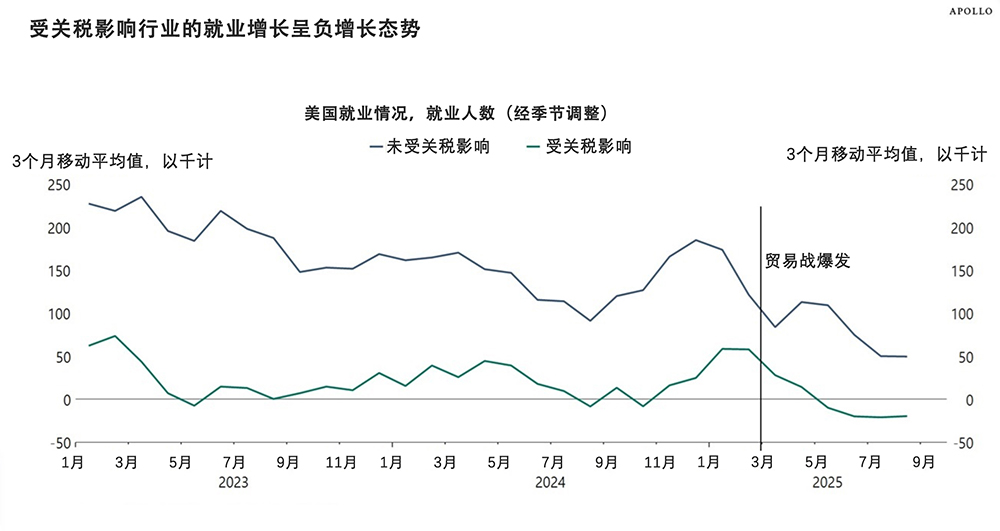
依據這一時間線及上述行業分類,對美國勞工統計局的數據進行深入研究,便能揭示出經濟中受沖擊最嚴重的領域。
在所有受關稅影響的行業中,自2月(貿易戰爆發前最后一個月)以來,就業人數凈減少9.01萬人。相比之下,同期整體就業人數增長38.5萬人,其中受關稅影響較小的醫療保健和酒店業成為推動就業增長的“中流砥柱”。
但即便在受關稅影響的行業內部,不同領域受沖擊的程度也存在差異。例如,制造業減少了4.1萬個工作崗位,批發貿易減少了3.4萬個工作崗位。
而建筑業就業崗位基本保持不變,零售貿易甚至新增1.9萬個工作崗位。采礦和伐木業雖減少1.6萬個工作崗位,但該類別包含油氣開采業——該領域受到原油價格下跌及歐佩克+為搶占市場份額而提高產量的雙重沖擊。
誠然,未直接受關稅影響的行業也出現裁員,這在一定程度上源于貿易戰引發的整體經濟不確定性。
數月以來,裁員行業數量一直多于新增就業行業數量,穆迪分析(Moody’s Analytics)首席經濟學家馬克·贊迪(Mark Zandi)警告稱,這種情況“只會在經濟衰退時出現”。
特朗普政府堅稱,其推行的減稅和放松監管政策將刺激經濟增長,關稅政策最終將創造更多就業崗位,并鼓勵企業加大國內生產投資。
在接受美國全國廣播公司(NBC)《與媒體見面》節目主持人克里斯汀·韋爾克采訪時,貝森特表示現行政策將創造優質高薪就業崗位。貝森特還稱,歷年8月采集的就業數據往往都會出現大幅修正的情況,并指責美聯儲未能更早實施降息舉措。
“特朗普總統當選的核心要義在于推動變革,我們將推行能讓經濟重回正軌的政策。我相信到第四季度,我們將會看到經濟增長大幅提速。”貝森特預測道。(財富中文網)
譯者:中慧言-王芳
? 8月慘淡的就業報告證實,勞動力市場在春夏兩季顯著降溫,而這恰逢唐納德·特朗普發動貿易戰之時。盡管部分受關稅影響行業的就業人數變動不大,但制造業、批發貿易等行業卻遭受沉重打擊。
自唐納德·特朗普今年年初發動貿易戰以來,受關稅影響行業已裁減數萬個工作崗位。
最新就業報告顯示,8月美國經濟僅新增2.2萬個就業崗位,且此前數月的數據經修正后顯示,6月實際就業崗位有所減少。與此同時,失業率小幅攀升至四年高點4.3%。
阿波羅全球管理公司(Apollo Global Management)首席經濟學家托爾斯滕·斯洛克 (Torsten Sl?k)在上周六發布的報告中指出,受關稅影響行業的就業增長呈負增長態勢,而未受關稅影響的行業雖增速放緩,但仍保持正增長。
特朗普時斷時續的關稅政策使得這場貿易戰的確切起始時間難以界定。今年2月,特朗普簽署行政令,對加拿大、墨西哥和中國加征關稅,但將針對加墨兩國的關稅推遲至3月實施。
4月,他宣布對幾乎所有國家征收“解放日”關稅,但在市場崩盤一周后暫停了該計劃。此后,特朗普與多個貿易伙伴達成協議,而與中國的談判仍在持續。然而,對于90多個未能達成此類協議的國家,所謂的“對等關稅”已于8月生效,不過該政策也面臨著重大法律挑戰。
斯洛克將3月視為貿易戰的開端,并指出受關稅影響的行業包括制造業、采礦與伐木業、建筑業、批發貿易、零售貿易、交通運輸業以及倉儲業。
依據這一時間線及上述行業分類,對美國勞工統計局的數據進行深入研究,便能揭示出經濟中受沖擊最嚴重的領域。
在所有受關稅影響的行業中,自2月(貿易戰爆發前最后一個月)以來,就業人數凈減少9.01萬人。相比之下,同期整體就業人數增長38.5萬人,其中受關稅影響較小的醫療保健和酒店業成為推動就業增長的“中流砥柱”。
但即便在受關稅影響的行業內部,不同領域受沖擊的程度也存在差異。例如,制造業減少了4.1萬個工作崗位,批發貿易減少了3.4萬個工作崗位。
而建筑業就業崗位基本保持不變,零售貿易甚至新增1.9萬個工作崗位。采礦和伐木業雖減少1.6萬個工作崗位,但該類別包含油氣開采業——該領域受到原油價格下跌及歐佩克+為搶占市場份額而提高產量的雙重沖擊。
誠然,未直接受關稅影響的行業也出現裁員,這在一定程度上源于貿易戰引發的整體經濟不確定性。
數月以來,裁員行業數量一直多于新增就業行業數量,穆迪分析(Moody’s Analytics)首席經濟學家馬克·贊迪(Mark Zandi)警告稱,這種情況“只會在經濟衰退時出現”。
特朗普政府堅稱,其推行的減稅和放松監管政策將刺激經濟增長,關稅政策最終將創造更多就業崗位,并鼓勵企業加大國內生產投資。
在接受美國全國廣播公司(NBC)《與媒體見面》節目主持人克里斯汀·韋爾克采訪時,貝森特表示現行政策將創造優質高薪就業崗位。貝森特還稱,歷年8月采集的就業數據往往都會出現大幅修正的情況,并指責美聯儲未能更早實施降息舉措。
“特朗普總統當選的核心要義在于推動變革,我們將推行能讓經濟重回正軌的政策。我相信到第四季度,我們將會看到經濟增長大幅提速。”貝森特預測道。(財富中文網)
譯者:中慧言-王芳
? The dismal August jobs report confirmed the labor market cooled significantly during the spring and summer. That coincided with the start of President Donald Trump’s trade war. While some tariff-impacted industries have seen minimal changes in payrolls, others like manufacturing and wholesale trade have taken bigger hits.
Since President Donald Trump launched his trade war earlier this year, industries impacted by tariffs have shed tens of thousands of jobs.
The latest jobs report revealed the U.S. economy added just 22,000 jobs in August with revisions to prior months showing June actually saw a decline. Meanwhile, the unemployment rate edged up to a four-year high of 4.3%.
In a note on Saturday, Torsten Sl?k, chief economist at Apollo Global Management, observed job growth in tariff-impacted sectors is negative, while those not affected by tariffs have seen slower growth but remain in positive territory.
Trump’s on-again, off-again tariffs have made that pinning down the exact start of his trade war a bit tricky. In February, he signed an executive order to impose tariffs on Canada, Mexico and China, but put the ones on Canada and Mexico on hold until March.
In April, he unveiled his “Liberation Day” tariffs on nearly all countries, but put those on hold after a week amid a market crash. Since then, Trump has reached deals with several trading partners while talks with China continue. But for more than 90 countries without such deals, so-called reciprocal tariffs took effect in August, though they also face a major legal challenge.
For his part, Sl?k sees March as the start of the trade war and listed manufacturing, mining and logging, construction, wholesales trade, retail trade, transportation, and warehousing as the industries impacted by tariffs.
Using that timeline and those sectors, a deep dive into Bureau of Labor Statistics data reveals which parts of the economy have been hurt the most.
Across all the tariff-impacted industries, payrolls fell by a net 90,100 after February—the last pre-trade war month. By contrast, payrolls overall grew by 385,000 during that span, as the health care and hospitality sectors, which are less affected by tariffs, have been the main drivers of job growth.
But even within tariff-impacted sectors, some areas have suffered more than others. For example, manufacturing shed 41,000 jobs, and wholesale trade lost 34,000.
But construction has been mostly flat, and retail trade even added 19,000 jobs. And while the mining and logging sector has lost 16,000 jobs, that category includes oil and gas extraction, which has been hit by lower crude prices and OPEC+ has ramped up production to grab market share.
To be sure, industries not directory affected by tariffs are cutting staff too, though that could be partly due to the general sense of economic uncertainty that the trade war has created.
For several months now, there have been more industries cutting jobs than adding them, a trend Moody’s Analytics chief economist Mark Zandi warned “only happens when the economy is in recession.”
The Trump administration has maintained that its tax cuts and deregulation will stoke more growth, with tariffs eventually creating more jobs and encouraging companies to invest in domestic production.
In an interview on NBC’s Meet the Press with Kristen Welker on Sunday, Treasury Secretary Scott Bessent said policies are in place that will create good, high-paying jobs. He also said payroll data collected in August has historically been prone to big revisions later, and he blamed the Federal Reserve for not cutting rates sooner.
“President Trump was elected for change, and we are going to push through with the economic policies that are going to set the economy right. I believe by the fourth quarter, we’re going to see a substantial acceleration,” Bessent predicted.

請打開財富Plus APP